
BTW-20 to BTW-40
These compact models cover about 20 m to 45 m still-air range and usually fit enclosed points, transfer areas, smaller yards, or projects where lighter power demand and smaller footprint matter first.
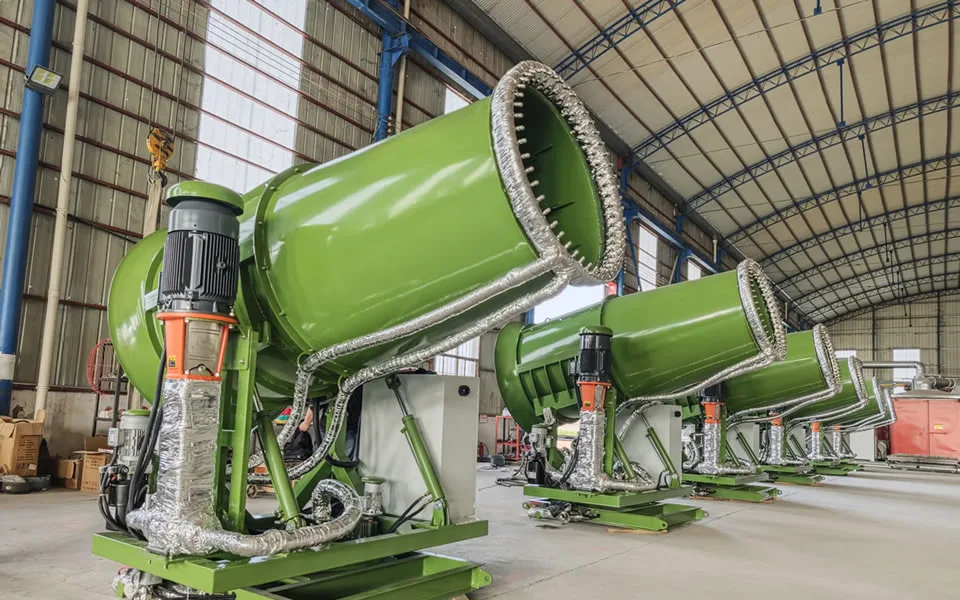
Long-range fog cannons are configured for industrial dust-suppression projects where spray distance, water route, installation form, control logic, and climate conditions must match the real site.
This product family is commonly used where dust needs to be controlled across open yards, stockpiles, transfer areas, and semi-enclosed industrial sheds. Typical projects include coal yards, ports, steel plants, mines, and coking facilities.
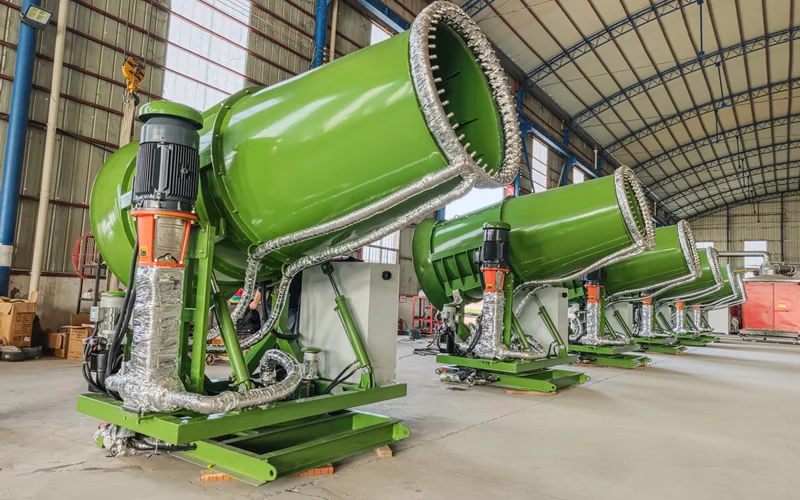
The model is only the starting point. Pump type, nozzle, installation, and control are then matched to the site conditions.
Once the basic working principle is clear, the next step is to match the spray range to the dust-control area before selecting the pump, nozzle, and control details.
These compact models cover about 20 m to 45 m still-air range and usually fit enclosed points, transfer areas, smaller yards, or projects where lighter power demand and smaller footprint matter first.
This middle bracket covers about 50 m to 75 m and is often the practical range for general steel-yard, coking, mining, or shed dust-suppression work where spray width and operating stability must stay balanced.
These large-yard models cover about 80 m to 150 m, typically with larger dual-ring nozzle layouts, heavier fan power, and soft-start or variable-frequency logic for ports, large coal yards, and wide-span industrial sheds.
The table below is the fastest way to compare spray range, fan power, pump power, water volume, nozzle layout, and machine weight. These figures are reference values and can still be adjusted to fit actual working conditions.
Scroll sideways to compare all 12 model columns.
| Model | Still-air range | Total power | Fan power | Pump power | Standard flow | Ultra-fine flow | Rotation | Pitch | Standard nozzles | Ultra-fine nozzles | Weight |
|---|---|---|---|---|---|---|---|---|---|---|---|
| BTW-20 | 20-25 m | <3 kW | 1.5 kW | 1.1 kW | 0.8-1 t/h | 0.2-0.4 t/h | 0°-350° | -10° - 45° | Single ring 12 | Three-ring 30 | Approx. 240 kg |
| BTW-25 | 25-30 m | <4 kW | 2.2 kW | 1.5 kW | 1.2-1.6 t/h | 0.3-0.5 t/h | 0°-350° | -10° - 45° | Single ring 12 | Three-ring 30 | Approx. 280 kg |
| BTW-30 | 30-35 m | <6 kW | 3 kW | 2.2 kW | 1.6-2 t/h | 0.5-0.8 t/h | 0°-350° | -10° - 45° | Single ring 12 | Three-ring 30 | Approx. 320 kg |
| BTW-40 | 40-45 m | <12 kW | 7.5 kW | 3 kW | 1.8-2.4 t/h | 0.7-1.2 t/h | 0°-350° | -10° - 45° | Single ring 24 | Three-ring 60 | Approx. 450 kg |
| BTW-50 | 50-55 m | <22 kW | 15 kW | 4 kW | 2-3 t/h | 1-1.6 t/h | 0°-350° | -10° - 45° | Single ring 30 | Three-ring 80 | Approx. 550 kg |
| BTW-60 | 60-75 m | <27 kW | 18.5 kW | 5.5 kW | 5-5.5 t/h | 1.4-1.8 t/h | 0°-350° | -10° - 45° | Single ring 36 | Three-ring 90 | Approx. 800 kg |
| BTW-70 | 70-75 m | <29 kW | 22 kW | 5.5 kW | 5-5.5 t/h | 1.4-1.8 t/h | 0°-350° | -10° - 45° | Single ring 46 | Three-ring 90 | Approx. 900 kg |
| BTW-80 | 80-90 m | <48 kW | 37 kW | 7.5 kW | 6-8 t/h | 2.2-3 t/h | 0°-350° | -10° - 45° | Dual ring 70 | Three-ring 120 | Approx. 1600 kg |
| BTW-90 | 90-100 m | <60 kW | 45 kW | 11 kW | 9-11 t/h | 2.5-3.5 t/h | 0°-350° | -10° - 45° | Dual ring 70 | Three-ring 120 | Approx. 1700 kg |
| BTW-100 | 100-110 m | <70 kW | 55 kW | 11 kW | 9-11 t/h | 3.2-4.5 t/h | 0°-350° | -10° - 45° | Dual ring 100 | Three-ring 150 | Approx. 2100 kg |
| BTW-120 | 120-130 m | <90 kW | 75 kW | 15 kW | 12-16 t/h | 4.3-5.8 t/h | 0°-350° | -10° - 45° | Dual ring 110 | Three-ring 150 | Approx. 2400 kg |
| BTW-150 | 130-150 m | <140 kW | 110 kW | 18.5 kW | 20-25 t/h | 5.5-7.8 t/h | 0°-350° | -10° - 45° | Dual ring 150 | Three-ring 180 | Approx. 3500 kg |
Installation has a major impact on fog cannon pricing, almost as much as spray range. A fixed unit, a mobile unit, and a truck-mounted unit may share the same atomization principle but still require different structure, utilities, and control packages.
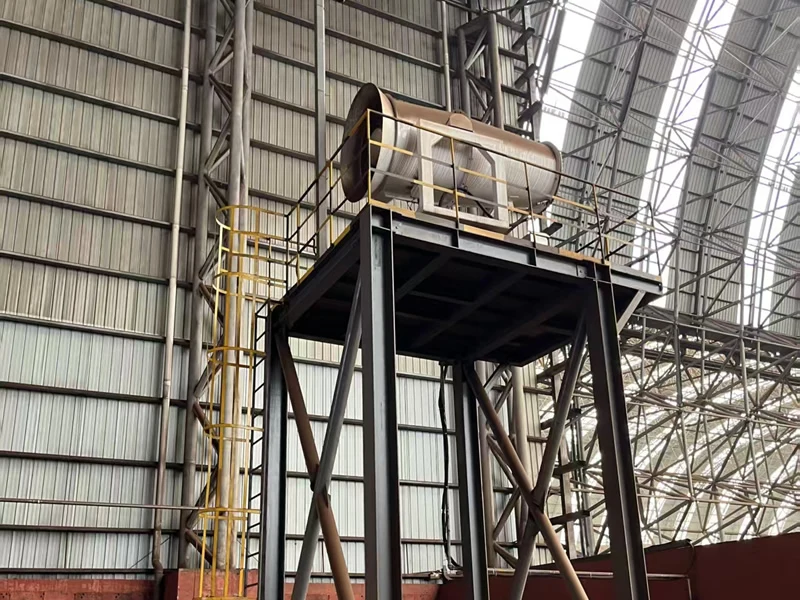
Suitable for sites with stable spray direction and long-term continuous operation. The unit can be matched with foundation work, reserved water supply, and reserved electrical connection.
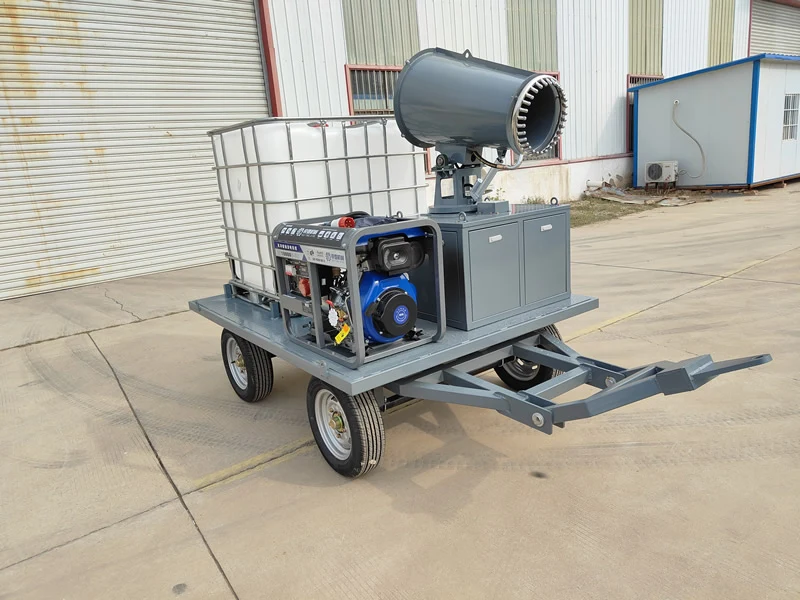
Available as towable, hand-pushed, or unmanned remote-control layouts. Water tanks, generators, and other complete-unit configurations can be integrated according to site conditions.
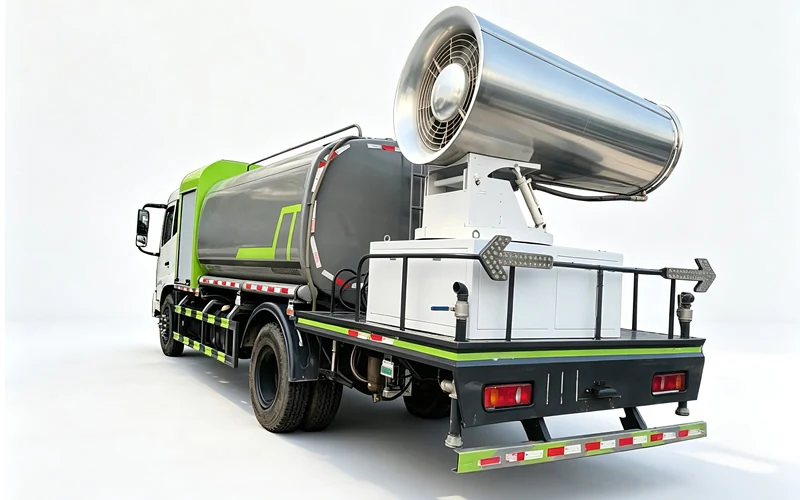
Suitable for temporary dust-suppression tasks that require fast transfer. The fog cannon can be integrated onto a truck, engineering vehicle, or dedicated chassis for movement between multiple work points.
The pump affects atomization performance, spray pressure, and maintenance method.
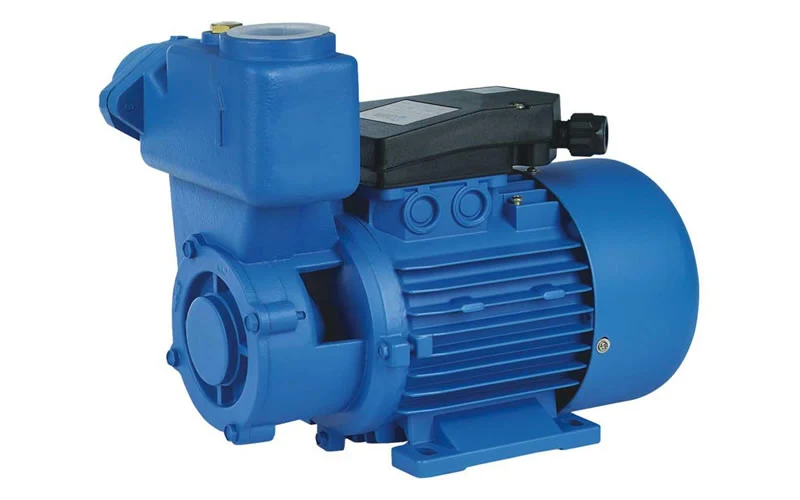
Compact structure with simple maintenance, suitable for standard dust-suppression scenarios where space is limited, budget matters, and ultra-fine atomization is not a strict requirement.
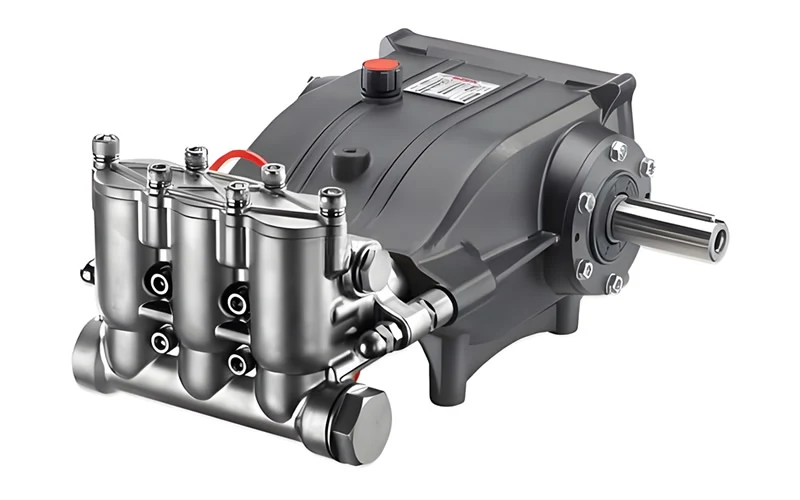
Higher pressure and finer atomization, suitable for high-pressure spraying, ultra-fine mist requirements, or projects without stable pipeline water supply that need self-priming capability.
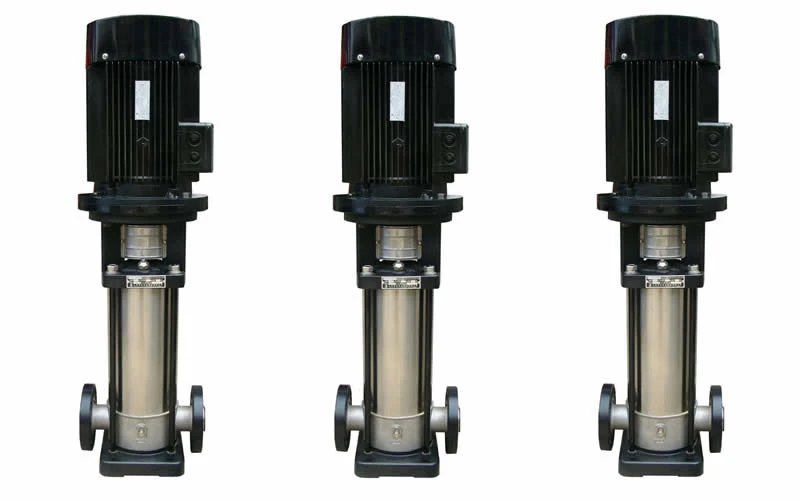
A stable and lower-noise route for projects with reliable pipeline water supply, especially where corrosion resistance and smooth running matter.
Nozzle ring quantity and structure determine mist density and coverage range, so they should be selected according to the fog cannon model, spray range, and working conditions.
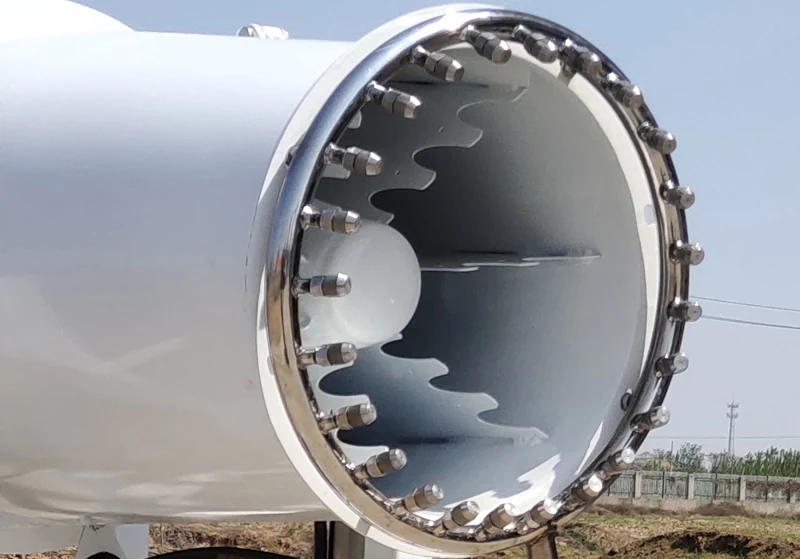
The single-ring route is the common economical structure. It is straightforward, easy to match, and suitable for standard dust-suppression work where nozzle quantity does not need to be very high.
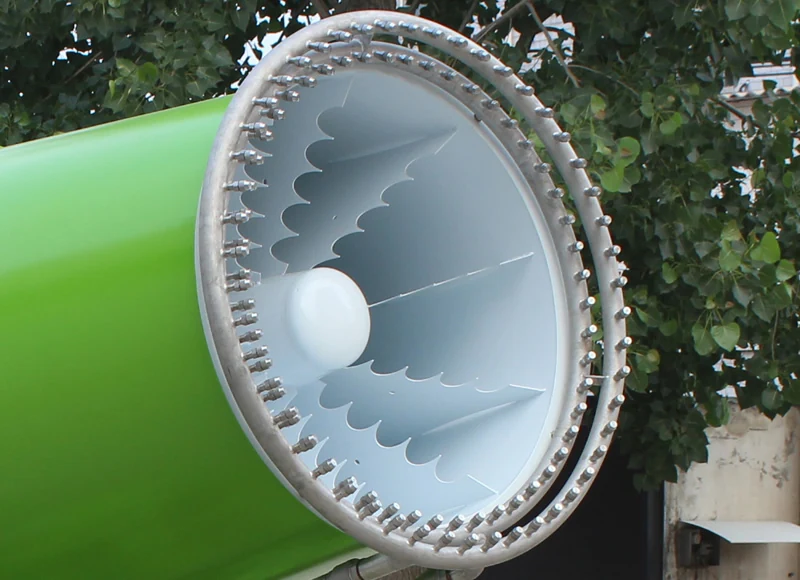
Dual-ring layouts allow more nozzles and more flexible matching of nozzle quantity and diameter, which is why they are common on large-yard and longer-range machines.
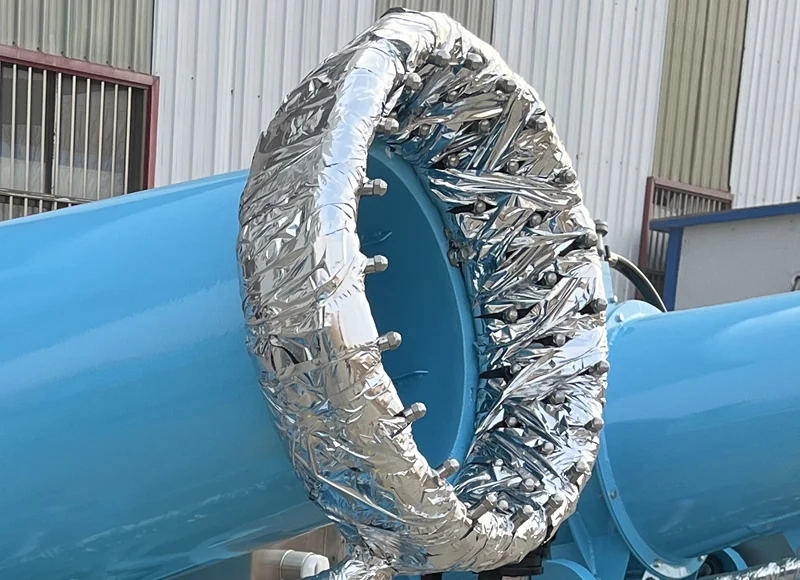
Three-ring layouts provide more nozzles and finer mist delivery, making them suitable for projects that want denser spray coverage and more flexible atomization tuning.
After the core fog cannon solution is confirmed, motion packages, control cabinets, anti-freeze components, and low-noise components can be selected according to power supply, control needs, installation method, and climate conditions.
| Starting method | Typical fit | What it changes |
|---|---|---|
| Direct start | Usually for small motors up to about 11 kW | Lowest cost and compact cabinet layout, but higher inrush current and higher grid impact during startup. |
| Star-delta start | Common mid-level route for projects that want a simpler cost structure than soft start | Reduces startup shock compared with direct start while keeping the control structure relatively familiar and economical. |
| Soft start | Usually recommended once fan power moves into larger-machine territory, especially above 18.5 kW | Provides gentler startup, lower grid shock, and protection functions such as phase loss, overload, and overtemperature. |
| Variable-frequency start | For projects that need softer startup, speed adjustment, and more flexible control logic | Allows frequency and speed adjustment, which helps larger models coordinate startup, spray behavior, and low-noise operating strategies. |
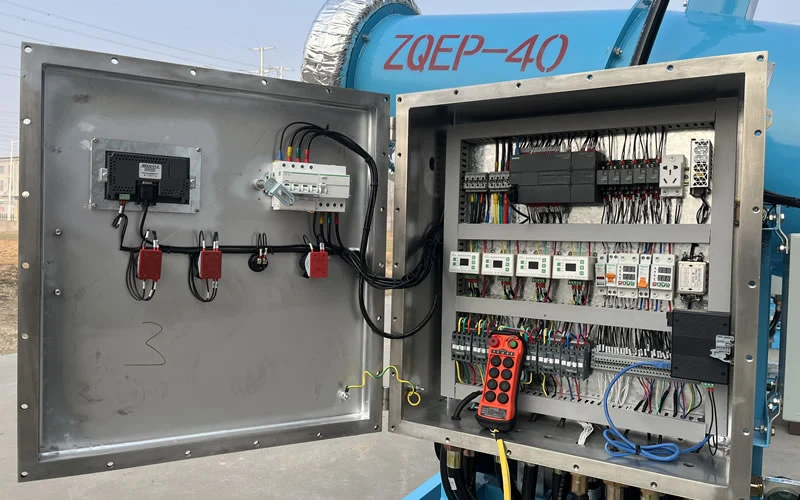
The PLC cabinet integrates motor protection, pump control, interlock protection, and remote monitoring for centralized automation.
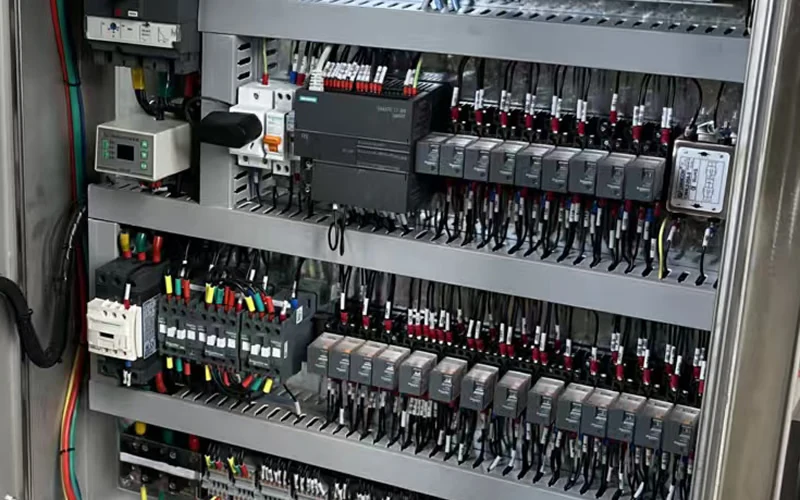
The control system can support multi-terminal operation with real-time feedback for pressure, temperature, and fault status.
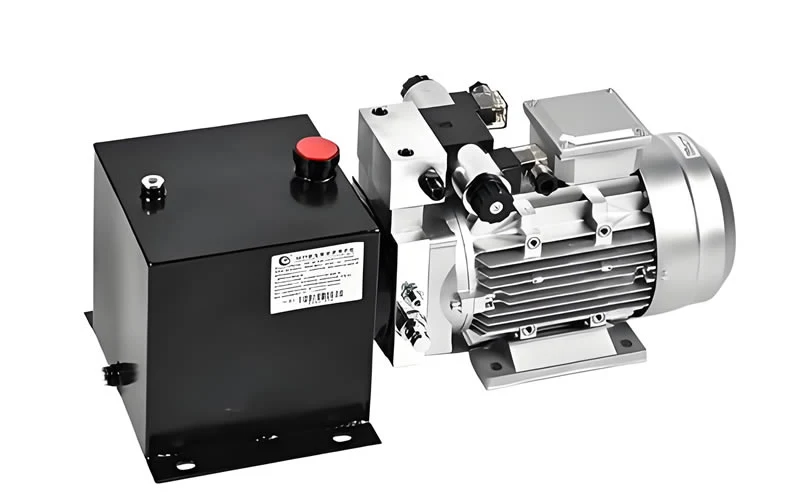
The motion system is selected according to equipment size and site load, using a hydraulic cylinder or electric pushrod as needed.
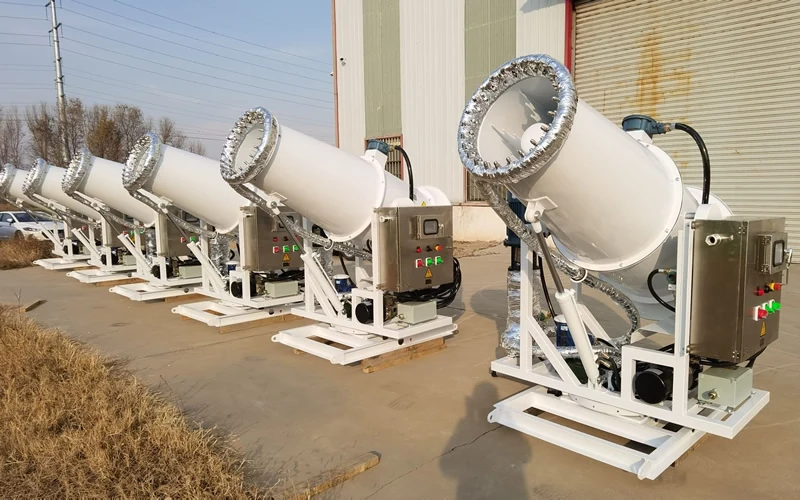
Anti-freeze and noise-reduction options can be selected according to climate conditions and environmental requirements.
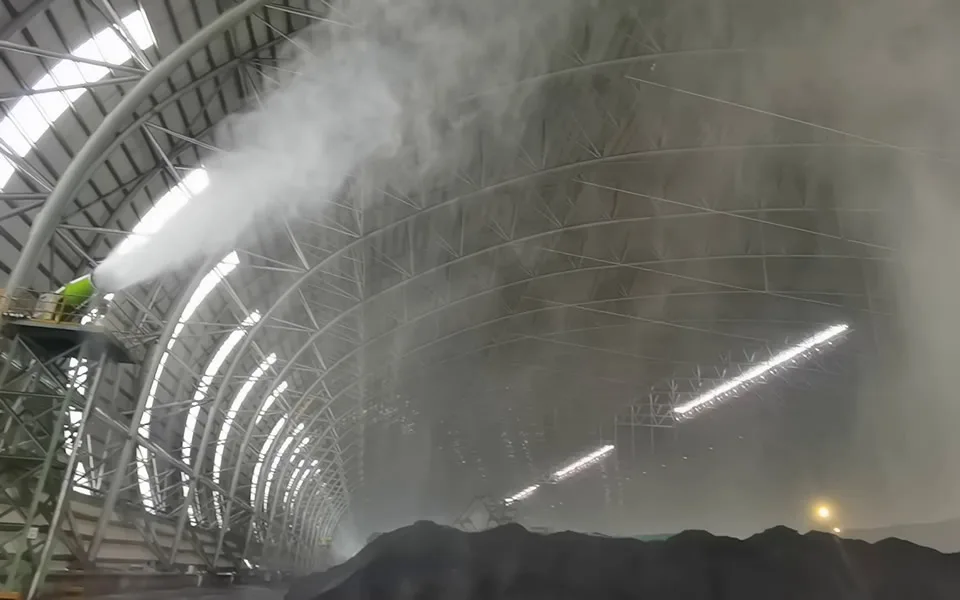
Video-led steel reference showing fog cannon operation for enclosed coal-shed dust suppression with 18 BTW-80 units.
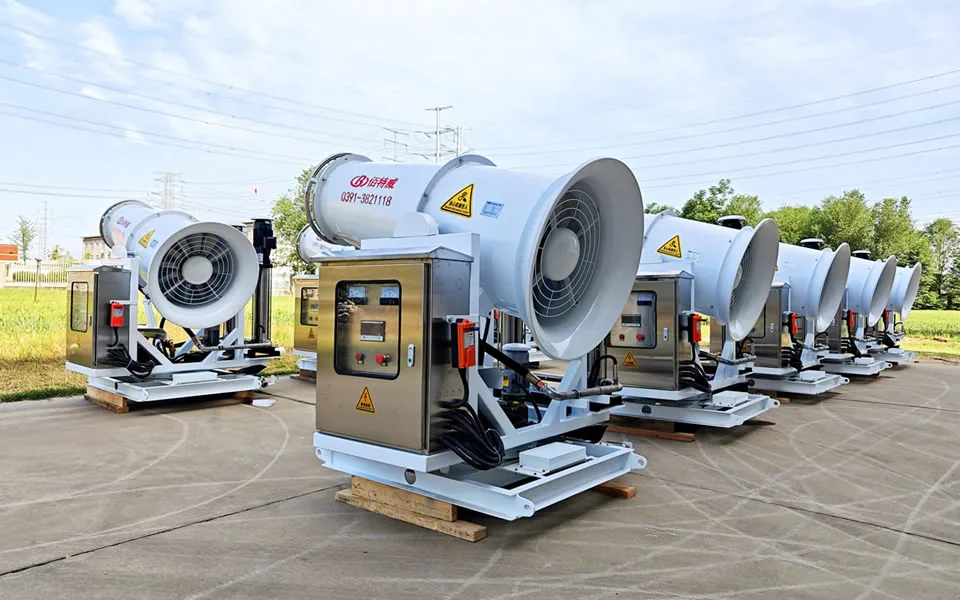
Steel dust suppression reference with 12 BTW-50/C fog cannons and visible operation footage.
Port bulk-terminal dust suppression reference with BTW-100 fog cannons and project video material.
That is usually enough for the first step. We normally start with the required still-air distance, the size of the dust area, the dust source, and whether the site is open or enclosed. From there we can narrow the range bracket first and then discuss pump type, nozzle ring, and installation form.
The table is a reference family, not a hard limit. We can still customize color, logo, voltage and frequency, range direction, pump route, control method, installation layout, winter package, and other details according to the project brief. MOQ is 1 unit.
If the site needs self-priming or finer atomization, the plunger route is usually the stronger option. If the site has stable pipeline water and prefers smoother, lower-noise running, a stainless multistage centrifugal pump is often a better fit. Vortex pumps are commonly chosen when space and maintenance simplicity matter more than maximum pressure.
Water use depends on the selected model, which is why the table lists standard and ultra-fine flow for each machine. In recirculated-water projects, actual water makeup can be only about 10 to 20 percent of total spray volume, because much of the water can be collected and reused depending on the site design.
Not usually. We test the machine before shipment, so site work is mainly focused on fixing the unit in position and connecting water and power. Fixed tower units still need suitable civil base work and electrical connection, while mobile or truck-integrated layouts are usually faster to bring into operation.
Available functions can include start and stop, pitch and rotation control, pump and fan switching, and operating-status feedback such as pressure, temperature, and alarm signals. Open-area wireless remote control is usually 100 meters or more, with 200-meter and 2-kilometer options available. Mobile-app and computer monitoring depend on network support.
For winter use, we can add heated nozzle or pipe routes, steam or electric tracing, and automatic drain functions. For low-noise projects, larger models can use lower fan speed, sawtooth outlet silencing that reduces high-frequency noise by about 3 to 4 dB, and sandwich acoustic structure that can reduce noise by about 5 to 10 dB.
Standard fog cannon models usually require 15 to 20 working days after order confirmation. Customized versions such as explosion-proof, cold-climate, or special-voltage units usually require 30 to 45 days depending on configuration complexity. The whole-machine warranty is 18 months, major components follow the same 18-month period, and two years of spare parts are shipped with the order.
These are the details that usually help us move from a broad inquiry to a narrower model and configuration recommendation.