
Fire suppression plus smoke control
Fine droplets create large heat-exchange area for cooling and fire control, while the turbine-driven airflow helps carry mist deeper into the protected zone.
Designed for substations, oil depots, tunnels, warehouses, ports, and other industrial sites, with spray modes, control systems, and installation options matched to site conditions.
High-pressure water is atomized through nozzles and carried by the turbine fan to the target area, creating a long-reach spray pattern suited to substations, oil depots, tunnels, warehouses, ports, and other industrial sites.
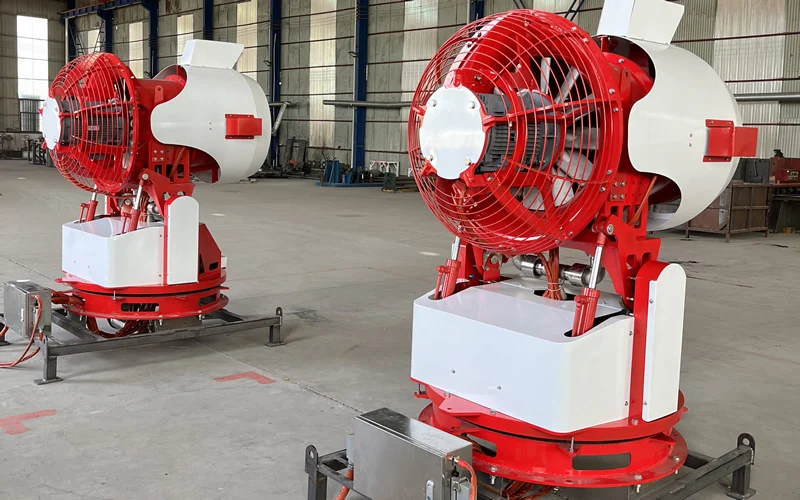
This product family is aimed at large outdoor or semi-open industrial sites where fast cooling, smoke suppression, and protected operator distance matter together.
Once the basic working principle is clear, the next focus is extinguishing effect, control flexibility, and how well the machine fits the real site.
Fine droplets create large heat-exchange area for cooling and fire control, while the turbine-driven airflow helps carry mist deeper into the protected zone.
Local buttons or touch screen, wireless remote control, computer-based control, mobile access, and thermal-imaging-assisted fire tracking can be matched to the project.
Power mode, materials, range direction, installation structure, explosion-proof options, and control details can all be adjusted before final order confirmation.
The same fire-protection logic can lead to very different equipment layouts depending on whether the project protects one fixed point, several movable risk points, or a vehicle-based emergency-response platform.
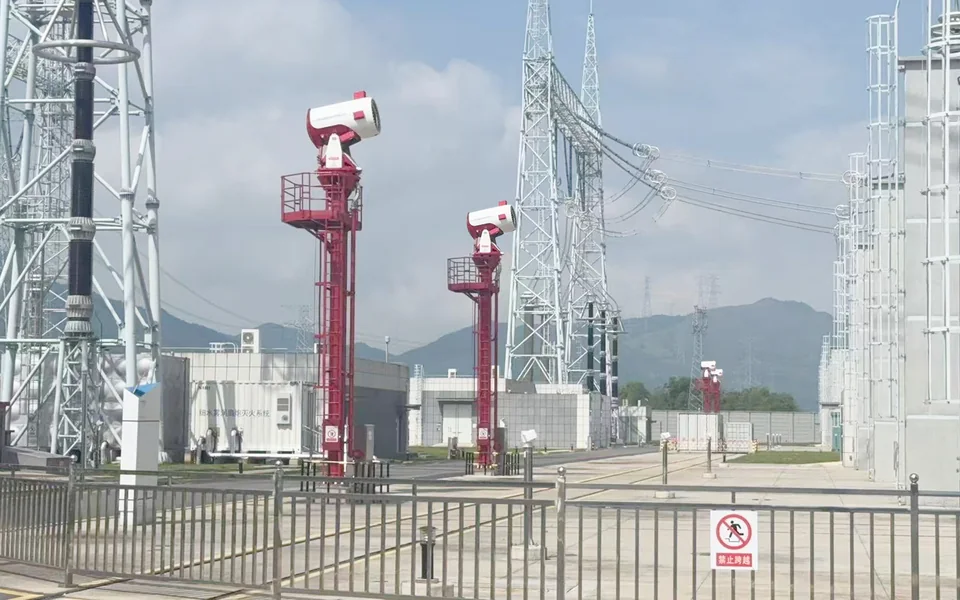
Anchor-mounted installation on an elevated platform is typically used when the site needs repeatable protection over one defined target area.
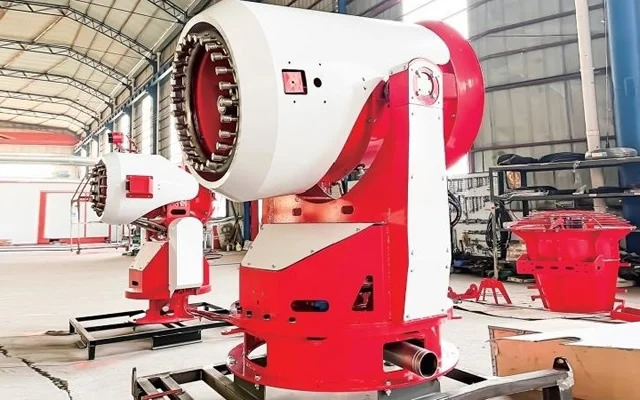
Mobile versions are used when the fire-protection task changes by working area and operators need to keep distance from the fire scene.
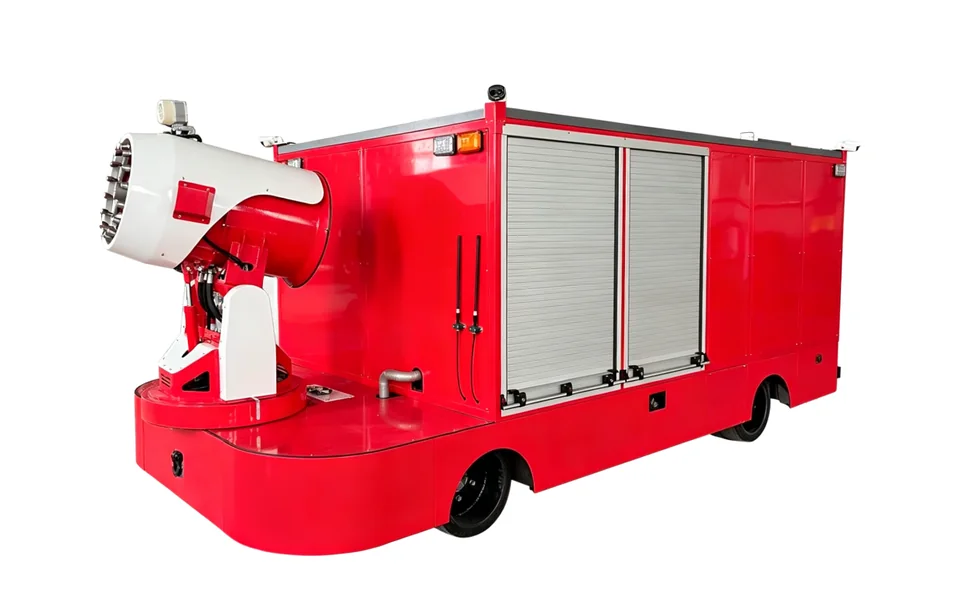
Vehicle integration is considered when the project needs a complete response platform for tunnels, ports, or large industrial emergency routes.
Each fire-protection site has different hazard points, utilities, and control requirements. A short selection process usually helps match the right spray mode, installation form, and control package to the project.
The first step is usually the actual fire-risk environment, such as transformers, tanks, tunnel sections, warehouses, or hazardous outdoor equipment zones.
Fine water mist, direct stream, or foam should be chosen according to the type of fire, required coverage, and local firefighting practice.
Fixed, mobile, and vehicle-mounted options affect structure and utilities, while local control, remote control, mobile access, or thermal-imaging-assisted tracking affect the control package.
Voltage, frequency, water pressure, destination-market certification needs, and delivery timing are usually confirmed before production begins.
These points are usually reviewed first when comparing spray media, utilities, installation reference, lead time, and after-sales support for a fire-protection project.
| Topic | Summary |
|---|---|
| Spray media | Fine water mist, direct stream, and foam are supported. Default foam proportion is about 3 percent, and AFFF or AR-AFFF compatibility can be discussed by project. |
| Power and drive | Reference fan power is 15 kW, with total machine power up to 20 kW including the hydraulic power unit. Standard supply is 380V / 50Hz three phase, with 220V, 415V, 440V, 480V, and 60Hz options available for export or special projects. |
| Materials and protection | Main shafts and wetted piping use 304 stainless steel, while the main body can use lightweight aluminum alloy. Water-shortage, overpressure, motor, and control-circuit protection can be included, and explosion-proof versions can be customized. |
| Reference size | The confirmed public reference is about 800 kg for the main unit excluding the transfer base, with a fixed-installation base of about 1.2 m by 1.2 m and cannon length around 1.5 to 1.9 m depending on configuration. |
| Lead time | Standard machines typically require about 20 to 30 working days. Customized versions such as explosion-proof, special-voltage, or vehicle-integrated projects usually require about 45 to 60 days after final technical confirmation. |
| Warranty and service | The confirmed public warranty is 18 months for the whole machine, with two years of spare parts shipped with the order, 24-hour technical response by email, video, or phone, and common spare parts usually dispatched within 48 hours. |
Confirmed public references help customers compare spray media, control mode, installation form, and fixed or mobile protection logic before project confirmation.
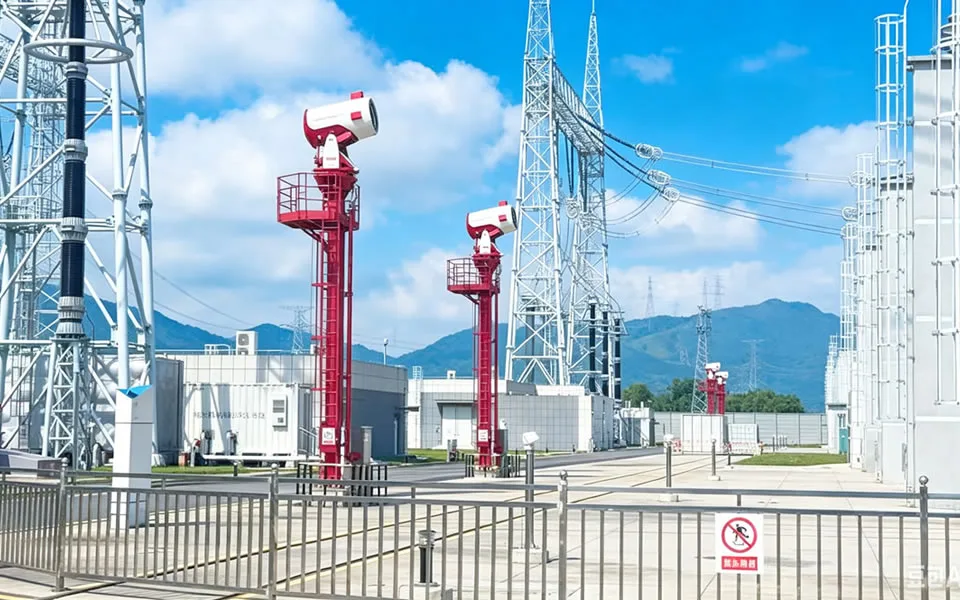
Power-sector firefighting reference for transformer and reactor protection using a BTW-WS25/F mist cannon.
Available extinguishing media and spray modes include fine water mist, direct stream, and foam. The default foam proportion is about 3 percent, and the system can be matched with AFFF or AR-AFFF foam liquid according to project requirements.
A common reference is direct-stream range of 80 meters or more and fine water mist range above 30 meters, but final performance still depends on working conditions, project water pressure, wind conditions, and the selected spray form.
Three main installation forms are available: fixed installation for substations and oil depots, mobile versions for relocation between risk points, and vehicle-mounted integration for larger emergency-response platforms.
Available control paths include local buttons or touch screen, wireless remote control, computer-based centralized control, and mobile-app remote access. Thermal-imaging-assisted automatic fire tracking can also be configured for suitable projects.
A common reference configuration uses a 15 kW fan with total machine power up to 20 kW, based on 380V / 50Hz three-phase power. Customized options such as 220V, 415V, 440V, 480V, and 60Hz can be discussed when the target market or project requires them.
Current public information supports domestic CCCF voluntary certification discussion. For export projects, CE, UL, or other destination-market firefighting compliance may need to be reviewed according to the final country and project scope.
Standard machines usually require about 20 to 30 working days after final technical confirmation. Customized versions such as explosion-proof, special-voltage, or vehicle-integrated projects usually require about 45 to 60 days.
The confirmed public warranty is 18 months for the whole machine, with two years of spare parts shipped with the order. Technical response is supported within 24 hours by email, video, or phone, and common spare parts are typically dispatched within 48 hours.
These details usually help us move from a general inquiry to a more realistic system direction much faster.