
Compact operation
Compact-body, low-speed, and maneuverable operation suit plant roads, parks, communities, and other utility spaces.
This manned four-wheel electric utility vehicle integrates early fire response, high-pressure washing, pesticide spraying, and public disinfection for compact site operations.
This manned four-wheel electric utility vehicle combines early fire response, high-pressure ground washing, pesticide spraying, and public disinfection on one compact platform. Its low-speed, maneuverable design suits plant roads, parks, logistics areas, farms, communities, and other sites where one vehicle needs to handle several routine tasks.
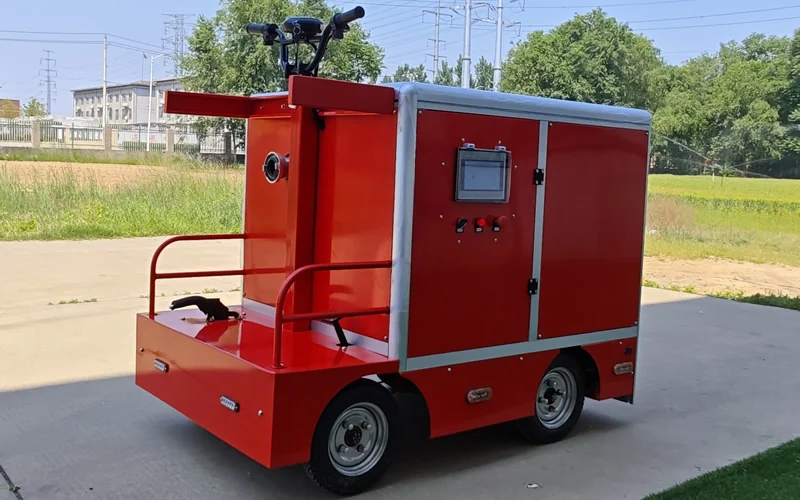
This vehicle family is intended for practical site utility work where compact size and multi-function use are important.
This compact electric utility vehicle is suitable for low-speed, maneuverable access and multi-function tasks, with configurations matched to the site, operating tasks, and specific requirements.
Compact-body, low-speed, and maneuverable operation suit plant roads, parks, communities, and other utility spaces.
One vehicle can support light fire response, washing, spraying, and disinfection in smaller site scenarios.
Please confirm tank size, pump selection, and optional equipment according to the intended application.
Electric utility vehicle selection should be matched to site conditions, operating tasks, and multi-function requirements, using proven project experience to guide the configuration.
Suitable for plant roads, logistics parks, farms, communities, and utility spaces where a small low-speed vehicle needs to move between work points.
Suitable for high-pressure ground washing, road-side spraying, pesticide spraying, and public disinfection tasks that need flexible water delivery.
Suitable for early fire response or auxiliary emergency use in parks, communities, workshops, and other sites where larger vehicles are not convenient.
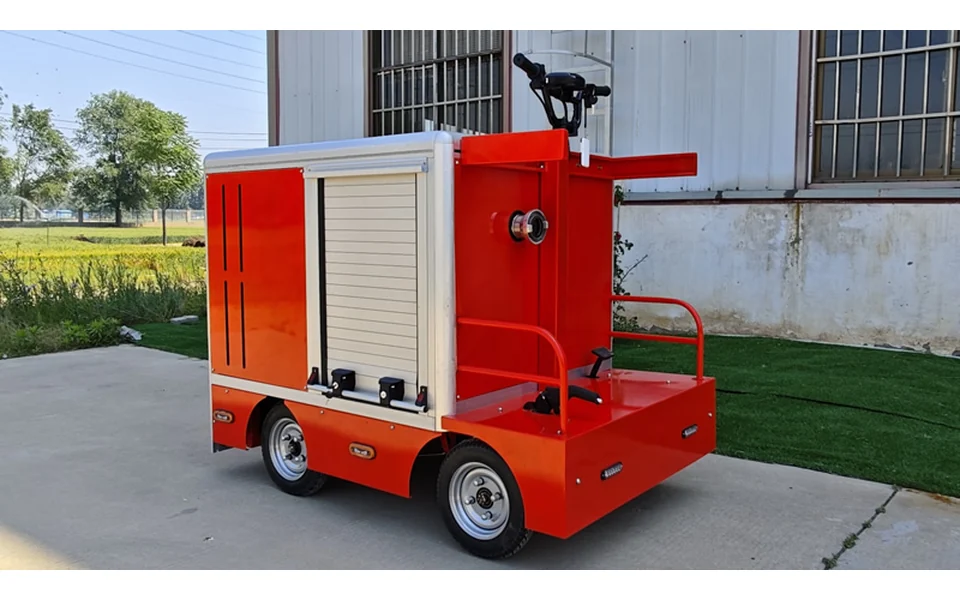
The user is an unnamed mini fire station at a high-speed railway station. The compact wheeled unit is intended for initial fire suppression in confined spaces.
A 72V 150Ah lithium-battery setup can provide about 20 km driving range in travel mode, or about 30 minutes of continuous operation when the vehicle is working with a full water tank.
A common reference configuration uses a 400 L sealed tank. Under a full tank, continuous spraying is about 20 minutes, and an external water source can also be connected for longer uninterrupted work.
One vehicle can cover a four-in-one utility role: early-stage fire response, high-pressure washing, pesticide spraying, and public disinfection, depending on the tools and accessories specified for the order.
With the current onboard charger reference, full charging is about 6-8 hours. Charger input and plug style can be adjusted according to the destination market.
Reference vehicle dimensions are about 1.6 m long, 1.0 m wide, and 1.5 m high, with about 1.0 m wheelbase. Final dimensions can still vary when accessories or order-specific modules change.
A common reference uses a high-pressure plunger pump, with outlet pressure around 5 to 8 MPa. This pump type is chosen because it supports stable pressure and works well for mobile washing or spraying tasks where self-priming ability matters.
These details help separate a general utility-vehicle inquiry from a more usable project configuration.